Corruption, Patronage, and Imperial Control: Rethinking Late Phanariot Governance in the Danubian Principalities (1812–1821)
Event: TransCorr Seminar
Location: NEC conference room & Zoom
19 November 2026, 16.00-18.00 (Bucharest time)
Constanța VINTILĂ, TransCorr team member; PhD. Senior researcher, Nicolae Iorga Institute of History of the Romanian Academy/ New Europe College, Bucharest
Recurrent link for all TransCorr seminars:
Join Zoom Meeting
https://us02web.zoom.us/j/86053564093?pwd=soarDcaeGTlulMIYP18BZtzjrtjKmj.1
Meeting ID: 860 5356 4093
Passcode: 197637
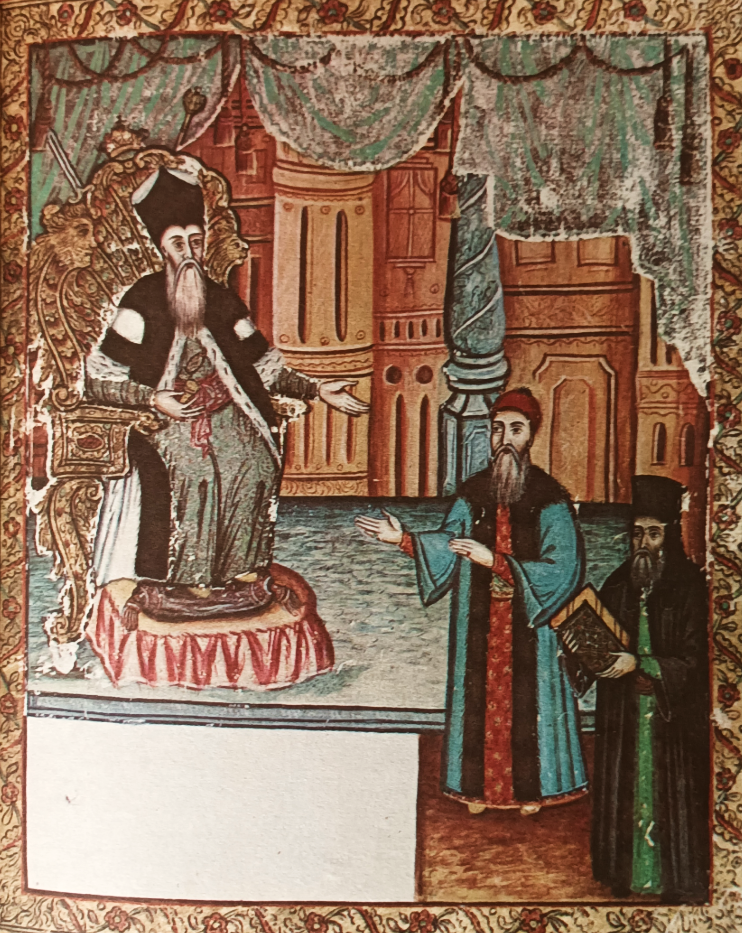
My conference reinterprets the final decade of Phanariot rule in Wallachia and Moldavia through the analytical lenses of corruption theory, principal–agent models, and neo-patrimonial governance. Focusing on the reigns of Ioan Caragea (Wallachia, 1812–1818) and Scarlat Callimachi (Moldavia, 1812–1819), it challenges the longstanding nationalist narrative that portrays late Phanariot rule primarily as a period of moral decay and endemic corruption.
Rather than treating corruption as individual deviance, the paper conceptualizes it as a structural feature of Ottoman imperial governance. The Danubian princes functioned as agents of the Ottoman center, operating under conditions of high fiscal extraction, short tenure, and limited monitoring. Such institutional constraints created predictable incentives for rent-seeking, patronage distribution, and office commodification. Within this framework, Caragea’s much-criticized fiscal policies and crisis governance during the plague epidemic appear less as exceptional abuses and more as intensified expressions of systemic pressures.
The divergence between Caragea’s negative reputation and Callimachi’s relative favor at the Ottoman court is analyzed through the prism of coalition management, loyalty signalling, and reputational politics. The 1819 Ottoman regulation restricting princely appointments to four families is interpreted as an institutional response to principal – agent failure – an early modern attempt at risk containment and elite control rather than a purely moral reaction to corruption.
By combining historical institutionalism with political economy approaches to corruption, this study contributes to broader debates on how empires manage peripheral elites, how anti-corruption reforms reshape rather than eliminate patronage networks, and how retrospective nationalist historiography moralizes structurally embedded governance practices. The late Phanariot case thus offers a historically grounded perspective on corruption as a negotiated and systemic phenomenon within hybrid political orders.
*
This event is part of an ongoing series of public seminars organized under the ERC research project “Transnational histories of ‘corruption’ in Central-South-East Europe (1750-1850)” – TransCorr, hosted by New Europe College [ERC-2022-ADG, project 101098095 -TransCorr – European Research Council Executive Agency (ERCEA)].